

Key Summary
Seafood isn’t just delicious, it’s one of the healthiest sources of protein you can add to your diet. Packed with omega-3 fatty acids, lean protein, vitamins, and minerals, seafood supports heart health, brain function, and overall well-being.
Many people struggle with finding nutrient-rich foods that are both tasty and beneficial for long-term health. Diets heavy in red meat, processed foods, and fried snacks often lead to heart disease, obesity, and fatigue. Imagine missing out on a natural superfood that could boost your energy, protect your heart, and even improve brain health. Despite being widely available, seafood is often overlooked in everyday diets due to misconceptions about freshness, safety, and preparation.
The truth is, seafood is one of the most nutrient-dense foods you can eat. From salmon and shrimp to oysters and sardines, the variety is endless, and so are the health benefits. In this blog, we’ll explore the health benefits of seafood, compare it to other protein sources, and guide you on making the best seafood choices for a healthier lifestyle.
Nutritional Profile of Seafood
Seafood is nature’s powerhouse of nutrients, offering a combination of lean protein, essential fatty acids, vitamins, and minerals. A typical serving of fish like salmon or mackerel provides high-quality protein, which helps build and repair tissues while supporting muscle health. What sets seafood apart from many other protein sources is its abundance of omega-3 fatty acids specifically DHA (docosahexaenoic acid) and EPA (eicosapentaenoic acid). These fatty acids are essential, meaning your body cannot produce them on its own, and they play a critical role in reducing inflammation, supporting cardiovascular health, and aiding brain development.
Seafood is also rich in vitamins such as Vitamin D, which supports bone health and immunity, and Vitamin B12, crucial for energy production and nerve function. Shellfish like oysters and clams are excellent sources of zinc and iron, both essential for immune strength and oxygen transport. According to the Harvard T.H. Chan School of Public Health, eating fish at least twice a week can significantly improve long-term health outcomes.
To learn more about choosing wisely, check out our guide on Best Healthy Seafood to Eat.
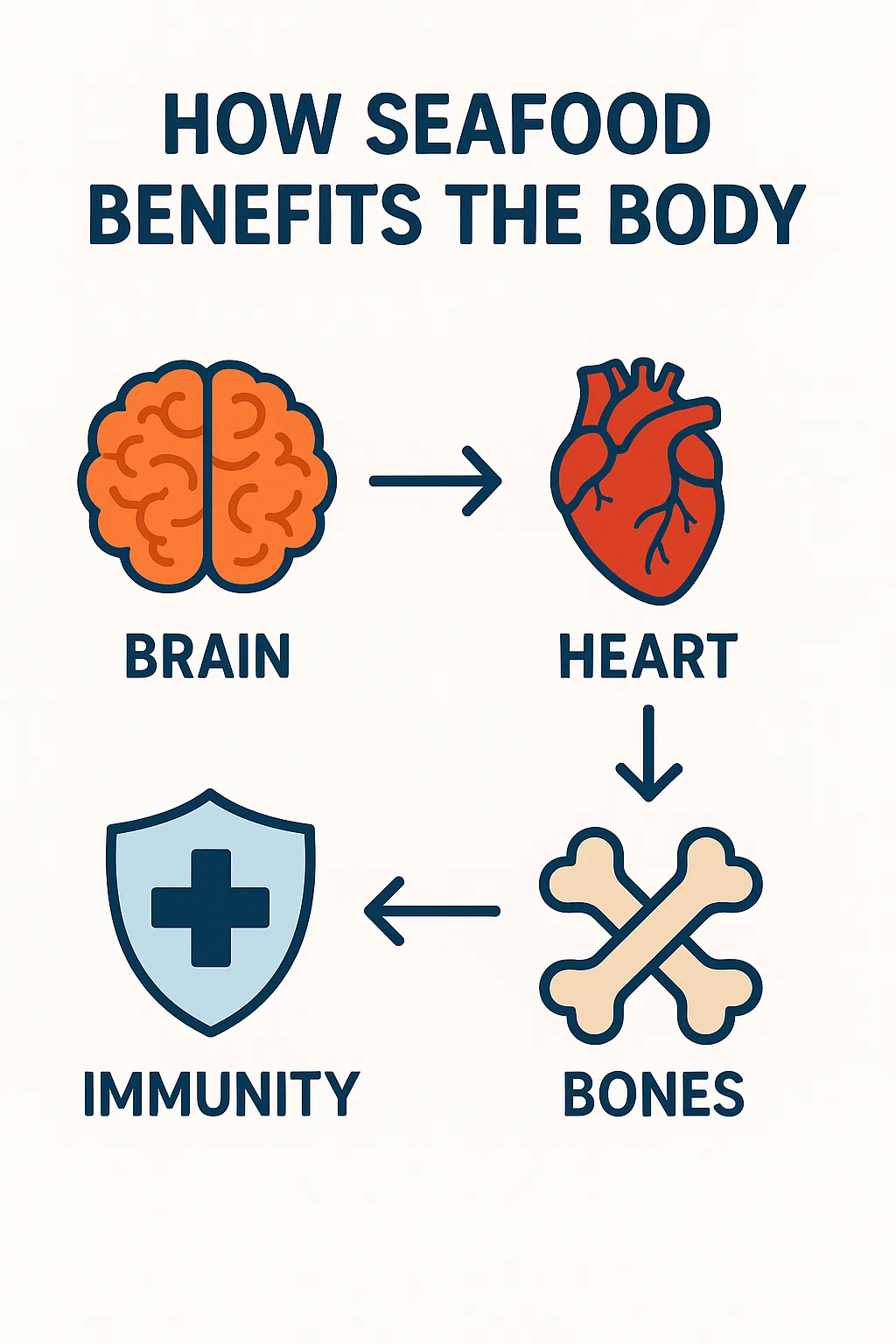
Omega-3 Fatty Acids and Heart Health
Seafood’s ability to prevent cardiovascular disease provides the best proof of its health benefits. Regular seafood eaters are less likely to suffer from high blood pressure, heart attacks, and strokes, according to studies. Eating fish, especially fatty fish like salmon, sardines, and tuna, at least twice a week is advised by the American Heart Association.
Omega-3 fatty acids enhance blood vessel function, lower triglycerides, and stop arterial plaque from accumulating. Additionally, they help reduce inflammation, which is a major cause of long-term diseases like atherosclerosis.
Check out our blog post, Is Seafood Healthier than Meat?, if you’re wondering if seafood is a better option than beef or chicken. examines this in depth.
Mental Health and Brain Function
With good reason, seafood is frequently referred to as “brain food.” The brain and retina depend heavily on the omega-3 fatty acid DHA, which has a direct impact on learning, memory, and focus. According to research, eating seafood on a regular basis lowers the risk of depression, Alzheimer’s disease, and cognitive decline in older adults.
Because seafood promotes healthy brain development in children, doctors frequently advise pregnant women to eat safe varieties of fish while they are pregnant. The National Institutes of Health claims that DHA supports the best possible neural development and cognitive function.
This advantage isn’t just for young people; older adults who eat seafood report improved mental clarity and memory retention. Our blog on Seafood Benefits for Women also provides a thorough analysis of the best seafood options for brain health, emphasizing the ways in which seafood promotes long-term and maternal wellness.
Key Nutrients in Popular Seafood Types
| Seafood Types | Key Nutrients | Primary Benefits |
|---|---|---|
|
Salmon
|
Omega-3, Vitamin D, Protein
|
Heart health, brain function
|
|
Shrimp
|
Protein, Selenium, Vitamin B12
|
Immune support, muscle health
|
|
Sardines
|
Omega-3, Calcium, Vitamin D
|
Bone strength, cardiovascular support
|
|
Oysters
|
Zinc, Iron, Vitamin B12
|
Immune health, energy production
|
|
Tuna
|
Lean protein, Niacin, Omega-3
|
Metabolism, brain health
|

Frequently Asked Questions
Most experts recommend eating 2–3 servings of fish per week to gain maximum benefits.
While fish oil supplements can help, consuming whole seafood offers additional nutrients like Vitamin D and selenium that supplements may lack.
Not at all. As we discussed, frozen seafood retains nutrients well if processed correctly.
Final Thoughts
Seafood stands as one of the most nutrient-rich, versatile, and enjoyable food groups available. From supporting heart health and cognitive function to offering unique benefits for women, seafood has something to offer for everyone. Choosing between fresh and frozen, comparing it with meat, or simply exploring new dishes at your favorite restaurants makes incorporating seafood into your diet easier than ever. And if you’re in the mood to enjoy a ready-made meal, don’t forget to explore Seafood takeout Bluefield VA, where local spots bring the ocean’s best flavors straight to your table.
References
Harvard T.H. Chan School of Public Health – Fish: Friend or Foe? https://www.health.harvard.edu/blog/fish-oil-friend-or-foe-201307126467
American Heart Association – Fish and Omega-3 Fatty Acids https://www.heart.org/en/healthy-living/healthy-eating/eat-smart/fats/fish-and-omega-3-fatty-acids
National Institutes of Health – Omega-3 Fatty Acids Fact Sheet https://ods.od.nih.gov/factsheets/Omega3FattyAcids-HealthProfessional/